Home
Home BlogWhy Sound, Footsteps, and Vision Don’t Create High-Level Mind Games in Free Fire
Why Sound, Footsteps, and Vision Don’t Create High-Level Mind Games in Free Fire
 Quinn Thompson


If you come from traditional tactical shooters, it’s natural to assume that sound cues, footsteps, and vision control are the backbone of high-level play. In many games, these elements form a dense layer of information warfare: baiting footsteps, masking reloads, abusing off-angles, and feeding opponents deliberate misinformation.
Free Fire feels like it should work the same way.
It doesn’t.
And the reason goes far deeper than “the game is casual.”
This isn’t an article about bashing Free Fire. It’s about understanding why its competitive ceiling is shaped by very different forces—and why players who apply classic shooter logic often end up solving the wrong problem.
Many experienced FPS players don’t lose in Free Fire because their aim is bad.
They lose because they’re playing a different game than the one Free Fire is actually running.
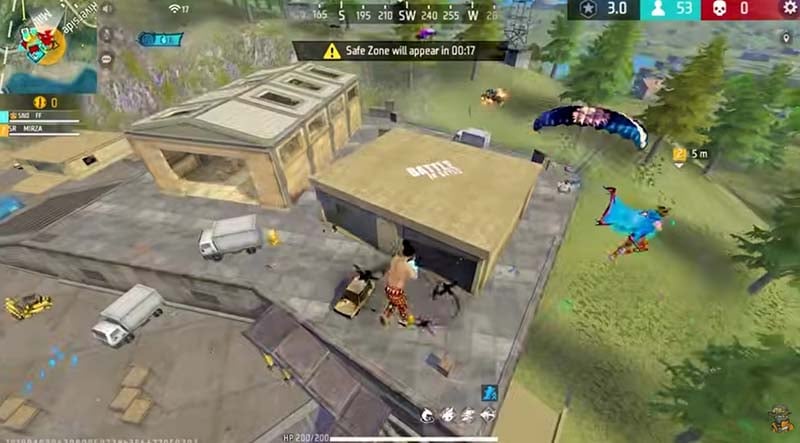
Information Is Only Powerful When It’s Scarce
High-level mind games only exist when uncertainty exists.
You can only outplay someone with information if that information is incomplete, delayed, or ambiguous. The moment information becomes abundant and reliable, it stops being leverage and starts being noise.
Free Fire aggressively removes uncertainty.
Audio cues are loud, exaggerated, and globally readable. Footsteps don’t whisper intent—they broadcast presence. Vision isn’t something you fight to control; it’s something the game hands out through wide fields of view, bright environments, and generous enemy visibility.
When everyone roughly knows where everyone else is, information no longer creates asymmetry.
It compresses decision-making.
Instead of asking, “What might the enemy do?” players are pushed toward a simpler question:
“Who shoots first, and whose setup hits harder?”
In Free Fire, having more information doesn’t make you smarter.
It makes everyone faster.
Sound Has No Deception Layer
In shooters where sound drives mind games, audio is manipulable. Players fake rotations, mask movement with gunfire, bait footsteps, or exploit vertical ambiguity to mislead opponents.
Free Fire’s sound design doesn’t allow for that layer of deception.
Footsteps are consistent, directional, and rarely misleading. Silence isn’t a weapon because the game’s pacing doesn’t reward it. Sprinting is almost always optimal. Walking to hide sound usually means giving up tempo without gaining positional advantage.
As a result, sound becomes confirmation—not strategy.
You hear someone because the game wants you to hear them, not because they chose to reveal themselves.
That difference is subtle, but it’s everything.
Vision Isn’t Contested, It’s Granted
In high-skill shooters, vision is earned. Angles are held. Sightlines are denied. Positioning is about controlling what the opponent cannot see.
Free Fire flips that dynamic entirely.
Visibility is forgiving. Player models are readable. Environments are designed to keep engagements flowing, not to reward line-of-sight denial. Even when cover exists, fights collapse quickly into close-range damage races.
Because vision is abundant, there’s little incentive to build layered positions or visual traps.
You don’t win by seeing first.
You win by executing faster.
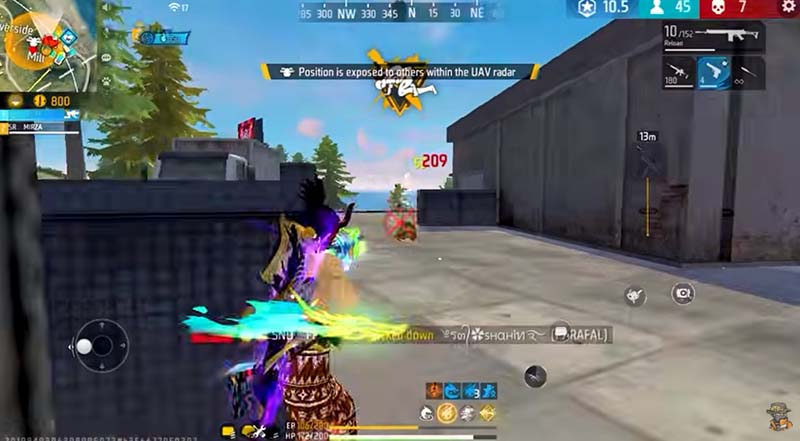
Time-to-Kill Kills the Mind Game
The most decisive factor undermining sound- and vision-based mind games in Free Fire is time-to-kill.
When TTK is extremely short, anticipation loses value. There’s no extended exchange where players probe, disengage, reinterpret information, and re-engage with new reads.
One clean burst often ends the interaction.
That reality shapes player psychology. When mistakes are fatal, players stop experimenting. They stop bluffing. They commit early—or they die.
Mind games thrive in systems where errors are survivable and information can be reinterpreted mid-fight. Free Fire rarely offers that second chance.
The Real High-Level Game Is Elsewhere
Once sound and vision stop being decisive, other systems quietly take over.
High-level Free Fire play revolves around:
• Loadout optimization and character skill synergies
• Resource timing and cooldown discipline
• Aggression control—knowing when to force fights and when to disengage
• Mechanical execution under extreme time pressure
• Macro positioning relative to zones and rotations
In this environment, progression choices matter more than many players expect. Optimizing access to characters, abilities, and builds early often defines how many viable decisions a player even has in a match—one reason experienced players treat tools like Free Fire top up as a strategic shortcut rather than a cosmetic convenience.
These layers don’t look flashy on stream.
But they decide matches long before the first shot is fired.
Why This Matters for Competitive Expectations
A lot of frustration around Free Fire’s competitive scene comes from mismatched expectations.
Players expect to outplay opponents through information manipulation. Free Fire rewards decisiveness, speed, and optimization instead.
Once you accept this, Free Fire starts to make sense.
It isn’t a slow chess match.
It’s a high-tempo efficiency test.
Sound, footsteps, and vision exist to accelerate conflict, not to complicate it. They lower the barrier to action so the real differentiators—execution and preparation—can decide the outcome.
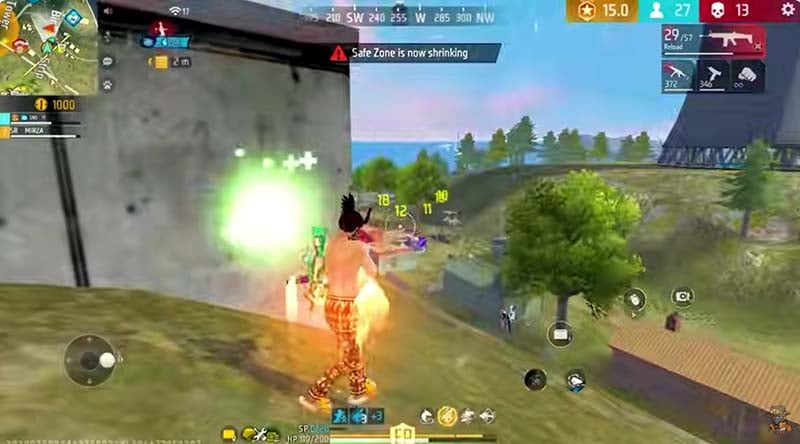
The Takeaway
High-level mind games don’t emerge simply because a game has sound and vision systems. They emerge when those systems create uncertainty, risk, and room for deception.
Free Fire deliberately minimizes all three.
That’s not a flaw. It’s a design choice.
Understanding that choice is the difference between fighting the game and mastering it.
When you stop chasing ghosts and start building around what Free Fire actually rewards, you stop reacting to noise—and start winning fights that truly matter.
 3.0K
3.0K 5.0
5.0 100+10 Diamonds$0.82-$0.15$0.97
 310+31 Diamonds$2.46-$0.43$2.9
 520+52 Diamonds$4.11-$0.73$4.84
 1060+106 Diamonds$7.81-$1.38$9.19
 2180+218 Diamonds$15.56-$2.75$18.31
 5600+560 Diamonds$39.09-$6.9$45.99
 Weekly Membership$1.64-$0.29$1.93
 Monthly Membership$8.24-$1.45$9.69
 Booyah Pass card$6.92-$1.22$8.14
 Weekly Lite$0.41-$0.07$0.48
 Jovial Symphony King Bundle$4.11-$0.73$4.84
 Queen Joyful Melody Bundle$4.11-$0.73$4.84
3.0K5.0