A lot of beginners go into Kingshot thinking the first week is just a setup phase. They assume they can click through the opening, upgrade whatever is available, spend resources as they get them, and fix the details later.
That is usually where the account starts going wrong.
If you have played enough progression-heavy strategy games, you already know the first seven days are not just about getting stronger fast. They are about avoiding the kind of early waste that keeps an account behind for weeks. By the time most new players realize something feels off, the damage is often already done. Their resources are thinner than they should be, their hero investment is too spread out, their speedups are gone, and their account looks active without actually being efficient.
That is the trap of the early game. It is very easy to feel productive while making low-value decisions.
The first week in Kingshot is where accounts quietly split into two groups. One group builds real momentum. The other ends up chasing progress that should have come naturally. The difference is usually not who played more. It is who understood what the opening week is actually for.
It is not mainly about pumping visible power as fast as possible. It is about building a clean account foundation. That means unlocking key systems quickly, following the right building path, choosing a practical core team, managing stamina with purpose, staying disciplined with speedups, and lining your progress up with the game’s event rhythm.
A lot of new players do the opposite. They upgrade everything evenly, invest in too many heroes, use speedups whenever they see a timer, join the first alliance with an open slot, and spend stamina on whatever looks convenient. Then Day 7 arrives, and the account already feels uneven. The power number may not look terrible, but the structure underneath it is weak.
That is why the first seven days matter so much. Early power is cheap. Clean progress is harder. And in Kingshot, clean progress is what actually carries an account forward.
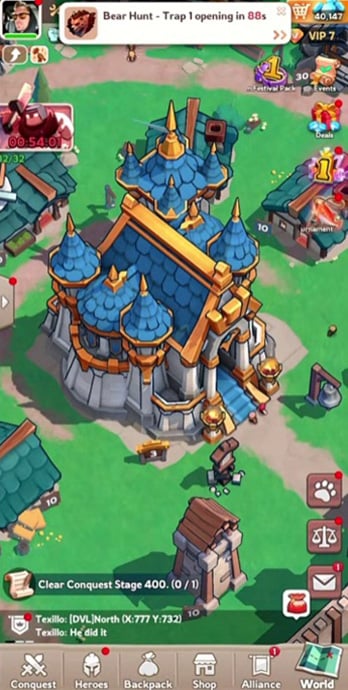
The First 7 Days Are About Efficiency, Not Just Growth
The biggest mindset change for beginners is understanding that early progress is not just about making numbers go up. It is about making the right numbers go up in the right order.
Early power can fool you
One of the most common beginner mistakes is chasing anything that gives instant visible progress. A building finishes, so another random building gets upgraded. A new hero appears, so resources immediately get dumped into them. A resource stack lands in the inventory, so it gets spent on the spot.
That feels productive, but a lot of the time it is not.
Not every upgrade is progress. Sometimes it is just movement. Sometimes it is a detour. Sometimes it is a clean-looking mistake that will cost you later.
Experienced players care less about whether their account looks strong at one moment and more about whether their resources are flowing into high-return targets. A quick power increase can be fake progress if it delays your headquarters path, weakens your event timing, or leaves your main team underbuilt.
The early game rewards efficiency much more than activity. Two players can spend roughly the same amount of resources and end up in very different positions by the end of the week. The one who uses those resources in the right order almost always comes out ahead.
The first week sets your account’s direction
Your first seven days shape much more than your short-term pace. They start defining what kind of account you are actually building.
This is when your building chain begins to settle. This is when your first real hero core takes shape. This is when your alliance environment starts affecting your growth. This is when event participation begins separating efficient accounts from messy ones. This is also when your PvE pace and your long-term ability to keep up with server tempo begin to show.
That is why the opening is less forgiving than many new players think. You do not need to play perfectly, but you do need to avoid obvious structural mistakes. A sloppy first week creates a weak account skeleton, and once that happens, every future improvement gets more expensive.
Not every resource should be used right away
One of the most expensive beginner habits is spending too early.
A lot of new players think the danger is being too slow or too passive. In reality, the real problem is often the opposite. They use things before those things have real value.
Speedups are the easiest example. New players often spend them the moment they see a timer because finishing something instantly feels good. But speedups are not just convenience. They are timing tools. They are event tools. They are leverage. Used well, they help you hit rewarding windows. Used badly, they disappear into random upgrades that do not really change your account.
The same logic applies to premium summons, rare hero materials, universal fragments, and stronger currencies. Just because you can spend something does not mean now is the best time to spend it.
A lot of bad early spending does not hurt immediately. That is exactly why so many beginners miss it. The account still moves. It just starts losing efficiency underneath.
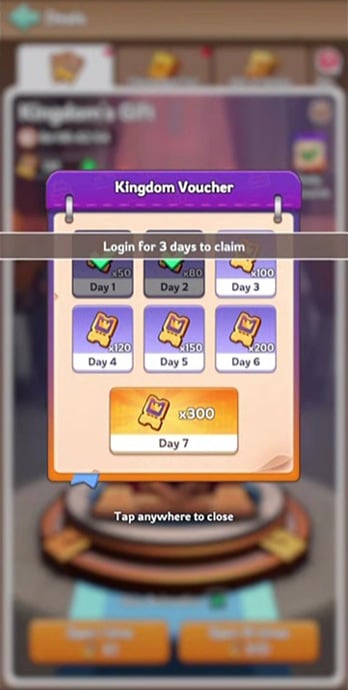
Days 1–2: Unlock Fast and Stabilize Your Foundation
The first two days are not about doing everything. They are about getting the account online properly.
Push core progression first
At the start, your biggest job is unlocking the systems that make the rest of the week smoother. That is why experienced players push core progression hard instead of getting distracted by side upgrades and low-impact tasks.
The earlier you unlock important functions, the earlier those functions start paying you back. Buildings, daily loops, alliance tools, hero growth systems, and progression-related features all become more valuable the sooner they are open and active.
If you spend too long drifting through the opening without pushing those unlocks, everything else slows down with it. Your account is not only limited by what it has. It is limited by what it still cannot do.
That is why the first two days should feel focused. You are not trying to sample every piece of content. You are trying to unlock the structure that lets the account breathe.
Follow a headquarters path, not a random building pattern
This is where a lot of beginner accounts quietly lose efficiency.
They do not fall behind because they ignored buildings. They fall behind because they upgraded too many buildings that did not matter yet.
In the early game, buildings should not be treated equally. Some are progression gates. Some improve your economy. Some support your main pace. Others are fine to leave behind for a while.
The classic beginner mistake is upgrading whatever is available just because it is lit up. That burns resources on side paths and slows your main city development. A better approach is to think in terms of chains. What does your next important city upgrade require? Which buildings directly support that path? Which ones improve your current progress instead of just filling space?
A clean early account usually looks simpler, not busier. It upgrades with purpose. It does not waste resources trying to make the map look evenly developed.
Use stamina to support tempo
Stamina is another place where experienced players create quiet advantages early.
A beginner often spends stamina on whatever looks easy or whatever drops something that seems useful. A stronger player asks a better question: does this actually help my account move forward right now?
During the first two days, stamina should mostly support your active progression path. That means using it on content that helps you unlock systems, clear roadblocks, strengthen your pushing team, or maintain the account’s momentum.
Scattered stamina spending is one of the fastest ways to slow yourself down without realizing it. Early stamina is not just about collecting materials. It is part of your account’s speed. If it gets wasted on low-impact farming too early, your progression path loses shape.
Build a temporary core team, not a fantasy roster
This is one of the most common early hero mistakes.
New players pull several heroes, get excited about all of them, and start investing across the board. On paper, that looks flexible. In practice, it creates a weak account because nobody gets strong enough to carry the opening.
For the first two days, you do not need your perfect long-term lineup. You need a team that works now. Usually that means one reliable main carry and one or two support pieces that make pushing content smoother and safer.
The opening is not about solving your final roster. It is about making sure your current roster can move the account. A focused temporary core beats a scattered collection of half-built heroes almost every time.
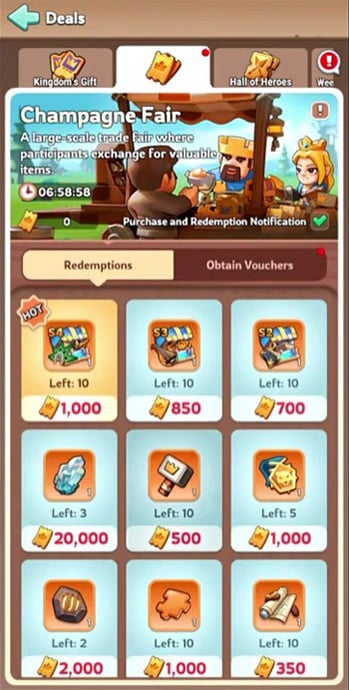
Days 3–4: Align Your Resources and Stop Wasting Strong Windows
This is usually where real account gaps start to show. The first two days are about unlocking and stabilizing. Days 3 and 4 are about filtering your decisions and lining them up with the game’s value windows.
Start spending with event timing in mind
This is the point where newer players and more experienced players stop looking the same.
A new player still thinks, “What can I upgrade right now?” A stronger player starts thinking, “What is the best thing to spend right now?”
That is the core of event-based progression. The same speedup, the same hero materials, and the same resource stack can be worth much more inside the right event window than outside of it.
This is why first-week discipline matters so much. Players who spend everything the moment they get it usually lose flexibility right when flexibility starts paying off. Players who hold a little more and plan a little farther ahead often do not look dramatically stronger in the short term, but they pull better event rewards and keep better momentum.
A strong first week is not built by nonstop spending. It is built by spending in places where the game actually pays you back.
Re-evaluate your alliance before it costs you more
By the middle of the first week, alliance quality starts affecting your growth in a real way.
A weak alliance does not just feel slower. It lowers your ceiling. Fewer active members, weaker coordination, slower helps, smaller group rewards, worse event performance, and less useful communication all start adding up.
That is why experienced players do not treat alliance choice like a background detail. They look at activity, participation, responsiveness, and overall direction early. If the alliance is underperforming, they move before the lost value stacks up.
A good alliance gives you more than convenience. It gives you a better growth environment. In the first week, that matters a lot more than many beginners realize.
Separate your resources by role
By this stage, you should stop thinking about your inventory as one pile.
Basic resources are there to keep the account moving. You want enough of them flowing that your building path does not stall.
Growth resources should be focused. Hero materials, development tools, and progression items are strongest when concentrated into the units and systems that actually carry your account.
Rare resources should be treated carefully. Premium summons, universal fragments, limited currencies, and higher-end materials should not be spent casually just because they are available.
Then there are timing resources. Speedups, stamina, event windows, and even your daily action order belong here. These are not just things you use. These are things you align.
Once you start sorting resources mentally like this, your decisions get much cleaner. You stop asking, “Can I use this?” and start asking, “Is this where it should go?”
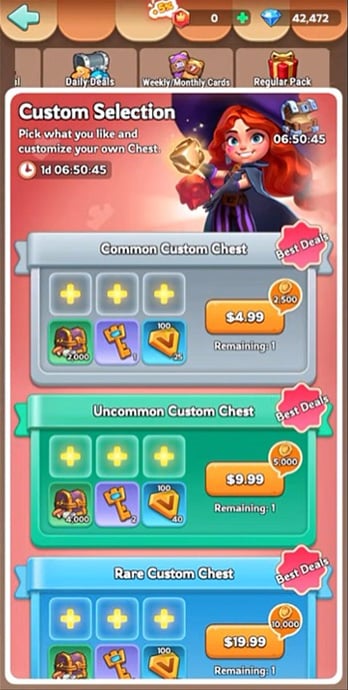
Days 5–7: Commit to a Direction and Set Up Your Midgame
The back half of the first week is where a lot of accounts either stabilize or start breaking underneath the surface.
Stop trying to do everything
By Day 5, you should no longer be playing as if every option in front of you matters equally. Your account needs direction.
Maybe you are leaning into steady PvE progress. Maybe you want to become useful in alliance content as quickly as possible. Maybe you are thinking more about long-term event efficiency. Maybe you are spending and trying to support faster short-term growth.
The exact route can differ, but the important thing is that you stop treating the account like a pile of unrelated upgrades. Once you know what your next stage is supposed to look like, your priorities become easier to manage.
This is where strong players start making clean tradeoffs. They stop chasing everything and start protecting what actually matters.
Do not chase fake power
This is one of the biggest first-week traps.
You see other players climbing. You feel pressure to catch up. So you start dumping resources into whatever makes the power number move. More random upgrades. More scattered hero investment. More speedups used at bad times. More short-term spending just to look closer to everyone else.
Sometimes that works for a day. Then the next event cycle arrives, and the account has nothing left underneath.
That is why veteran players care so much about follow-through. They want an account that can keep growing, not just one that looks strong for a screenshot. A good account is not only one that gains power. It is one that still has structure after gaining it.
By the end of the first week, you want your city path to stay smooth, your main team to function, your event participation to remain realistic, and your resource position to still have depth. That stored value matters. It is what lets you keep making strong decisions when the game starts punishing bad timing more heavily.
Lock in your main team
By now, early experimentation should be ending.
You do not need total endgame certainty yet, but you do need a firmer core. If you are still spreading your hero resources across too many units, your main lineup will stay too weak to carry the account through tougher content. That affects everything: PvE, alliance relevance, defense, and overall pace.
This is the point where commitment becomes stronger than flexibility. Keep your main team strong enough to push. Support it with only the pieces that actually improve it. Everything else can wait.
A lot of weak first-week accounts do not fail because they lack heroes. They fail because they never decide who the account is actually built around.
Think about value, not just spending
The second half of the first week is also when players naturally start thinking more seriously about long-term account value.
This is where topics like optional spending, premium efficiency, and upgrade pacing start becoming more relevant. And this is also why choices around kingshot recharge matter more later in the opening week than they do on Day 1. Early on, the game is mostly about structure. Later, any added value depends much more on whether your foundation is already clean.
That is the part many beginners miss. Spending does not fix bad planning. At best, it covers it for a while. At worst, it makes bad habits more expensive.
If you ever decide to spend, the smart way to think about it is not “Will this make me stronger right now?” It is “Does this support the account path I already built?” If the answer is no, then the purchase is usually solving the wrong problem.
The real goal is momentum after Day 7
A good first week is not one where your account looks impressive for a moment. It is one where the second week feels stable.
That means you have a clear main team, a clean development path, a useful alliance, stronger event timing, and enough stored value left to keep making good decisions. If you reach Day 7 with structure, direction, and options, you are in a much better spot than someone who burned everything just to inflate a power number.
The first week in Kingshot is not really a tutorial. It is account shaping.
On the surface, those first seven days look like a race to unlock things and grow quickly. Underneath, they are really about deciding what kind of account you are building and how expensive your mistakes will become later.
That is why experienced players take the opening seriously. They know the first week is not about doing more. It is about doing the most important things in the right order.
Get that part right, and the rest of the game usually feels much better.