If you’ve played Last War long enough, you know the moment.
You’re logging in daily.
Your base is upgraded.
Your marches are active.
Your activity hasn’t dropped.
On paper, you’re doing everything right.
Yet somehow, the gap between you and the top players stops shrinking — and starts widening.
This isn’t burnout.
It isn’t bad luck.
And it isn’t because you suddenly forgot how to play.
What you’ve hit is the mid-game wall — the point where Last War quietly shifts from a progression game into a structural power game.
And once you reach it, no amount of farming alone will get you through.

The Mid-Game Wall Isn’t About Difficulty — It’s About Structure
Most players assume the mid-game slowdown means the game is simply “getting harder.”
That’s not quite true.
The early game of Last War is designed around linear effort:
More time → more progress
More activity → visible gains
More farming → competitive relevance
As long as everyone is climbing the same hill, effort feels fair.
The mid-game works differently.
From this point forward, progress becomes non-linear. Two players can put in the same time and effort — and end up in completely different places.
That’s because progress now depends less on how much you play, and more on where you sit inside the game’s power structure.
That structure has three layers:
Account momentum
Alliance positioning
Server maturity
If you’re misaligned with even one of them, farming turns into maintenance — not advancement.
You’re still moving.
You’re just not moving forward.
Why Farming Stops Closing the Gap
Early on, farming works because everyone is operating under similar ceilings.
Later, those ceilings quietly diverge.
Top players aren’t just stronger because they farmed more. They’re stronger because they crossed power thresholds that raw resources alone can’t reach.
What actually changes isn’t obvious at first.
Those thresholds include:
Once these layers are active, farming no longer creates momentum. It only slows decay.
That’s why so many players describe the same feeling:
“I didn’t fall behind all at once.
I just stopped catching up.”
That moment — when effort no longer closes distance — is the wall.
The Illusion of Effort Equality
One of the most frustrating parts of the mid-game wall is how fair everything still looks.
You’re still:
Completing dailies
Participating in events
Keeping upgrades running
But effort is no longer being rewarded equally.
At this stage, two players can do the same things for the same amount of time — and see radically different results.
Not because one is better.
But because one player’s effort is being multiplied by systems already in place.
It’s not that you’re doing less.
It’s that the game is amplifying someone else’s progress while yours stays flat.
The game never tells you when this shift happens.
It simply expects you to notice — or fall behind.
Power Gaps Are Locked In Before You Can See Them
By the time the power gap becomes obvious on the leaderboard, it’s already permanent.
Not because of one purchase.
Not because of one event.
Not because of one bad decision.
But because of early compounding alignment:
Being in the right alliance before alliance bonuses scaled
Hitting unlock breakpoints before server pacing slowed
Stacking advantages when systems were still forgiving
Later on, even selective spending — including a carefully timed Last War top up — can only optimize within your tier.
It doesn’t move you into another one.
This is the hardest truth for mid-game players to accept:
You can’t out-farm a missed phase.
Why the Mid-Game Wall Breaks Motivation
Most players don’t quit because they lose battles.
They quit because the game stops answering a simple psychological question:
“If I try harder, will it matter?”
At the mid-game wall, the answer becomes unclear.
Wins feel conditional.
Losses feel inevitable.
Progress feels cosmetic.
That uncertainty creates a quiet disengagement loop:
You log in later.
You skip one event.
You miss a coordination window.
You fall slightly further behind.
By the time players realize what’s happening, they’re already past the point where effort feels meaningful.
The Mid-Game Wall Is the Game’s Real Filter
Last War doesn’t filter players by skill.
It filters them by adaptation.
Players who survive the mid-game wall usually do one of three things:
Reposition socially (alliances, coordination, timing)
Redefine success (influence instead of dominance)
Accept structural limits and play efficiently within them
Players who don’t often assume they failed.
They didn’t.
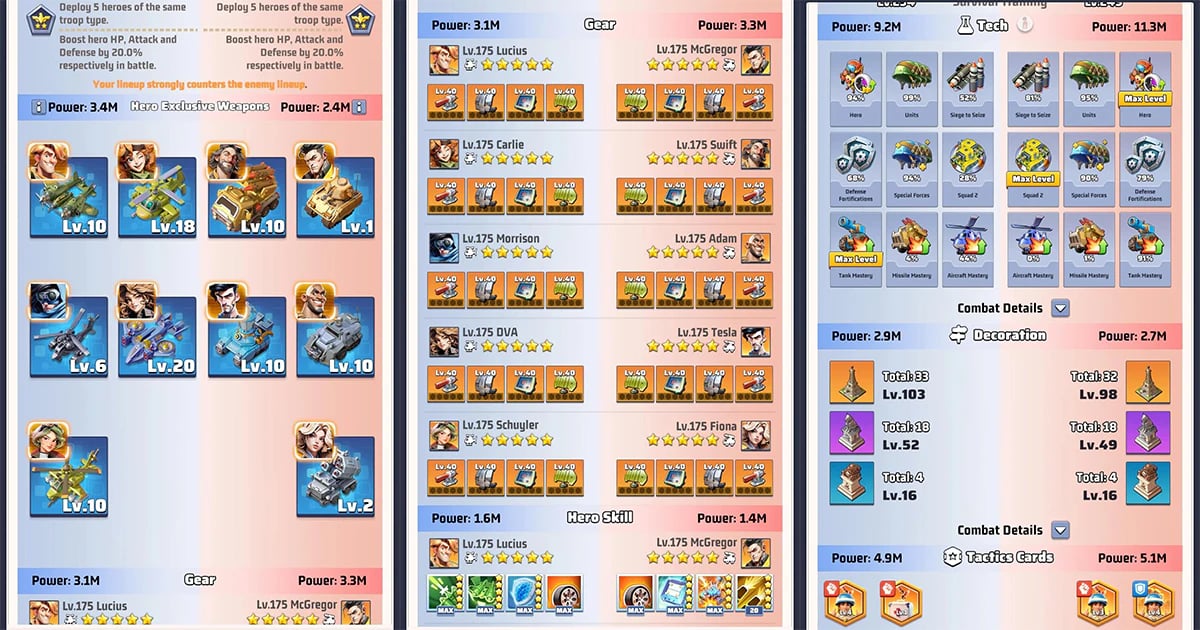
They simply reached the point where Last War reveals what it actually is — not a growth game, but a power ecosystem.
Final Perspective
The mid-game wall in Last War isn’t a design mistake.
It is the design.
It exists to separate:
Once you understand that, the frustration makes sense.
You didn’t stop progressing because you played wrong.
You stopped progressing because the game stopped being linear.
And in Last War, knowing when farming stops working is often more important than knowing how to farm better.