Most Free Fire players think fights are decided by weapons or luck.
In reality, most gunfights are decided by distance control and movement.
At long range, fights revolve around positioning and timing.
At mid range, it’s about crosshair discipline and strafing.
At close range, the entire fight becomes a battle of movement mechanics and Auto-aim manipulation.
Free Fire’s Auto-aim system makes the game feel very different from traditional shooters. Understanding how it works—and more importantly, how to break it—is one of the biggest skill gaps between casual players and experienced ones.
In this guide, we’ll break down:
How Free Fire’s Auto-aim really works
How movement should change depending on distance
Why Jump Shots are one of the strongest mechanics in close-range fights
If you master these concepts, your win rate in gunfights will increase dramatically.
Understanding Free Fire’s Auto-Aim System
One of the biggest differences between Free Fire and many other shooters is its Auto-aim assistance.
But a lot of players misunderstand how it actually works.
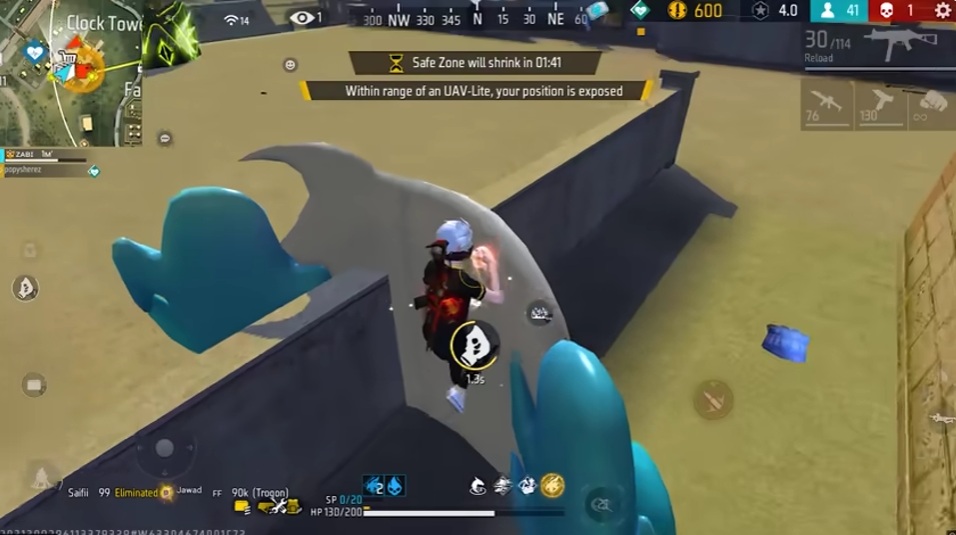
Auto-aim does not fully lock onto enemies. Instead, it subtly adjusts bullet direction when your crosshair is close to a target. The effect becomes stronger the closer you are to the enemy.
Because of that, Auto-aim tends to favor predictable targets.
Players who:
are extremely easy for the system to track.
On the other hand, Auto-aim becomes less reliable when a target is constantly changing position.
Movement patterns that weaken Auto-aim include:
jumping
erratic strafing
vertical movement
sudden direction changes
This is why high-level fights in Free Fire often look chaotic. Experienced players aren’t just aiming—they’re actively breaking the opponent’s Auto-aim lock.
In many cases, the player who disrupts the opponent’s aim first wins the fight.
Long-Range Fighting: Sniper Positioning and Peek Logic
When fights happen at long range, positioning matters far more than reaction speed.
Sniper players who rely purely on quick reflexes often lose to players with better positioning and cover usage.
The key rule is simple:
Never expose more of your character than necessary.
Instead of standing in the open while aiming, experienced players rely on peek shooting.
The rhythm looks like this:
Peek → Fire → Return to cover
By constantly ducking in and out of cover, you force your opponent to readjust their aim every time you reappear.
Another mistake many players make is taking sniper duels while standing fully exposed.
Even if you land the first shot, you’re giving your opponent a clean opportunity to return fire.
A better approach is to:
This approach reduces the chances of getting instantly knocked by an enemy sniper.
In long-range engagements, patience almost always beats aggression.
Mid-Range Combat: Movement, Strafing, and Aim Control
Most fights in Free Fire happen at mid range, where assault rifles and SMGs dominate.
This distance is interesting because Auto-aim is still active, but movement starts playing a much bigger role.
Players who stand still during mid-range fights are extremely easy targets.
Instead, strong players rely on controlled strafing.
The most effective pattern is simple but intentional:
Move left → brief pause → move right → brief pause.
This movement pattern makes you much harder to track without completely destroying your own aim stability.
Continuous straight-line movement is actually worse, because the enemy’s Auto-aim can easily adjust.
Another common mistake is over-flicking the crosshair.
Free Fire doesn’t require the kind of dramatic mouse flicks seen in PC shooters. Instead, the game rewards small adjustments combined with consistent tracking.
Let Auto-aim assist your shots, but maintain control with subtle corrections.
Players who learn this balance tend to land far more consistent damage during mid-range engagements.
Close-Range Combat: Jump Shots and Breaking Auto-Aim
Close-range fights are where Free Fire’s mechanics become the most skill-dependent.
Ironically, this is also where Auto-aim is strongest.
At close range, the system can easily adjust bullets toward the enemy’s body. If two players stand still and trade shots, the fight often comes down to weapon damage alone.
That’s exactly why experienced players rely heavily on Jump Shots.
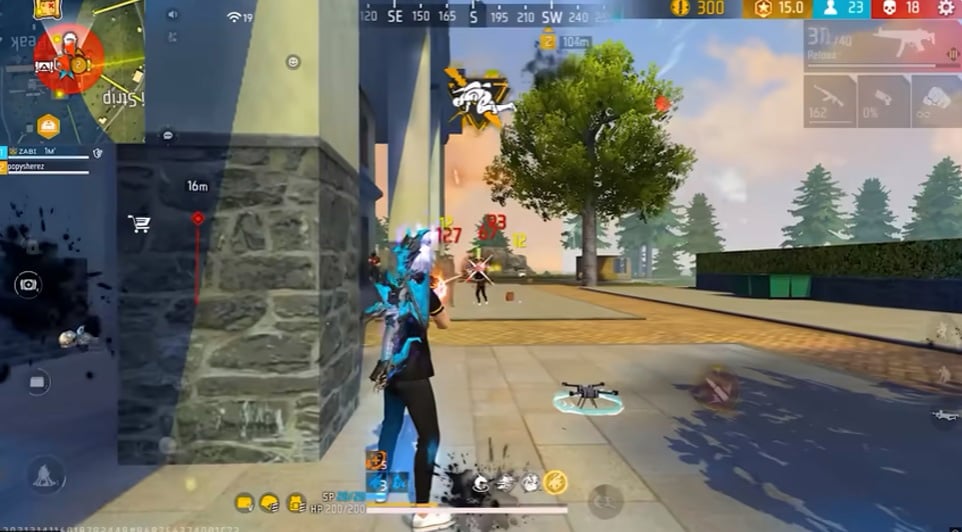
Jumping during a gunfight causes your character’s hitbox to move vertically. This momentarily disrupts the opponent’s Auto-aim tracking.
When combined with shooting, this creates a powerful offensive pattern.
A common high-level movement sequence looks like this:
Jump → Shoot → Strafe → Shoot again
The jump forces the opponent’s aim to shift, while the strafe prevents them from re-locking onto your body.
This mechanic becomes even more important in shotgun fights.
Shotguns often decide close fights in a single shot. The player who lands the first accurate hit usually wins.
Because of that, shotgun duels frequently involve rapid movement patterns like:
jumping
side strafing
quick directional changes
Players who rely purely on Auto-aim without movement often lose these encounters against more mobile opponents.
Why Movement Matters More Than Gear
Free Fire includes a lot of progression systems—characters, skins, abilities, and cosmetics.
Some players also choose to get a Free Fire top up to unlock diamonds for new characters, weapon skins, or event rewards.
Those upgrades can certainly enhance your loadout.
But when it comes to actual combat, gear is rarely the deciding factor.
The biggest skill gap in Free Fire almost always comes down to three things:
movement control
distance awareness
aim discipline
Players who understand when to snipe, strafe, or rush have a huge advantage regardless of their equipment.
Final Thoughts: Distance Control Wins Gunfights
Free Fire may look simple on the surface, but its combat system has surprising depth.
The best players don’t just aim better—they control the fight.
They understand:
when to slow down and hold angles with a sniper
when to strafe and pressure enemies at mid range
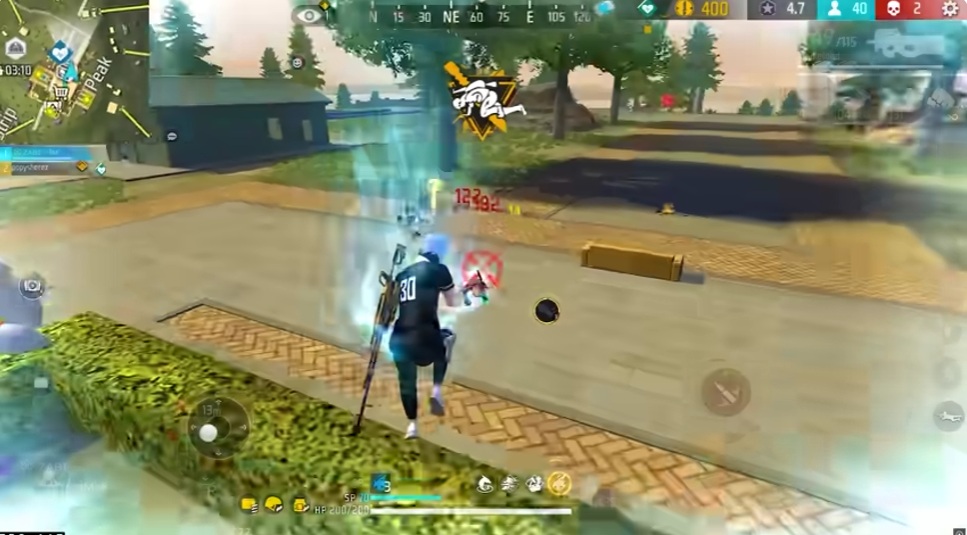
when to break Auto-aim entirely with aggressive movement
Once you start thinking about fights in terms of distance and movement, your decision-making changes.
And that’s when you begin to win fights more consistently.
Because in Free Fire, the real difference between average players and strong ones isn’t luck or gear.
It’s how well they control the fight itself.